
Does Buying from a Dispensary Go on Your Record?
Buying from a dispensary does not go on a public record or background check. Dispensaries track purchases for regulatory compliance, but that data is confidential and not shared with employers or police without a warrant.
Does the Dispensary Keep a Record of Your Purchase?
Yes, dispensaries keep records of your purchases, but these are not public. California law requires licensed dispensaries to track every transaction for regulatory compliance, using systems like METRC. This data includes what you bought, how much, and when, but it is tied to your ID for age verification only, not for any public database.
| What's Tracked | Why It's Tracked | Who Can See It |
|---|---|---|
| Product type and quantity | State-mandated inventory tracking | Dispensary staff, state regulators (audits) |
| Date and time of purchase | To ensure compliance with purchase limits | Same as above |
| Your ID information (name, DOB) | Age verification (21+ or 18+ with medical card) | Dispensary staff only, not stored on public record |
| Payment method | For transaction processing | Payment processor, not shared with government |
This record is not a "criminal record" or anything that appears on a background check. It exists solely for regulatory compliance and is confidential.

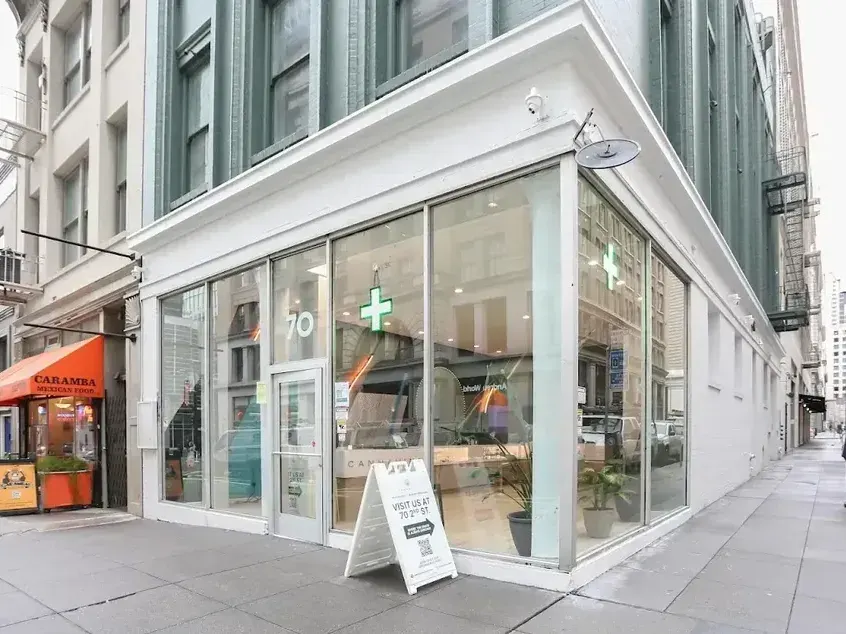
Can the Government or Police See Your Dispensary Visits?
In general, police and government agencies cannot see your dispensary visits without a warrant. Dispensary records are considered confidential business records, and law enforcement must obtain a court order to access them. California's track-and-trace system (METRC) is designed for inventory control, not for monitoring individual consumers.
That said, if you are involved in a criminal investigation, authorities could subpoena those records. But for everyday purchases, there is no active surveillance. Your visit to a dispensary in SoMa or the Financial District is not broadcast to any government database.
Is Your Dispensary Purchase Private?
Yes, your purchase is private in the sense that it is not public information. Unlike a court record or a property deed, dispensary purchases are not accessible to the general public. The state tracks aggregate sales data, but not individual consumer profiles.
However, privacy is not absolute. Dispensaries retain records for compliance, and under the California Consumer Privacy Act (CCPA), you have the right to request what data a business holds about you. But this is a far cry from a public record. Your purchase is confidential between you, the dispensary, and regulators—not something your neighbor can look up.
Why Do Dispensaries Scan Your ID?
Dispensaries scan your ID primarily to verify you are 21 or older (or 18+ with a medical recommendation). This is a legal requirement under California law. The scan also helps prevent sales to minors and ensures compliance with purchase limits.
| Step | What Happens | What They Do With the Info |
|---|---|---|
| 1. Present your ID | Budtender checks the physical ID | Confirms it's government-issued and not expired |
| 2. Scan or manual entry | ID is scanned or details entered into the POS system | Records your name and DOB for age verification |
| 3. Data storage | Information is stored in the dispensary's system | Used for compliance, not shared with third parties |
| 4. Your privacy | Data is protected under CCPA | You can request deletion or access |
Some dispensaries use systems like BioTrack or METRC, but these are for inventory, not for building a consumer profile. Your ID scan is a routine age check, not a background check.
Directions to our dispensary near SoMa from Mourad
Start at Mourad and head to Cannavine Cannabis Dispensary (San Francisco) at 70 2nd St, San Francisco, CA 94105.
California Dispensary Privacy Laws: What You Should Know
California has strong privacy protections for cannabis consumers. The California Consumer Privacy Act (CCPA) gives you rights over your personal data, including what dispensaries collect. Additionally, the state's track-and-trace system (METRC) is not a public database.
| Law/Regulation | What It Does | How It Protects You |
|---|---|---|
| CCPA | Gives consumers rights over personal data | You can request what data a dispensary has and ask for deletion |
| California DCC regulations | Requires dispensaries to track inventory and sales | Ensures compliance but doesn't expose your info publicly |
| HIPAA (for medical cannabis) | Protects medical information | Applies to medical recommendations, not recreational purchases |
| METRC | Track-and-trace system | Used for inventory, not for monitoring consumers |
These laws ensure that your purchase history is not public record and is only accessible to authorized entities under specific circumstances.
Will Dispensary Purchases Show Up on a Background Check?
No, dispensary purchases do not show up on standard background checks. Background checks typically look at criminal history, credit, and employment records—not retail transactions. Your purchase at a dispensary is not a criminal offense, and there is no public record of it.
For security clearances, the situation is similar. Government agencies might ask about drug use, but they cannot access dispensary records without a warrant. If you have a medical marijuana card, that is also confidential under HIPAA-like protections, though it's not a public record. In short, your cannabis purchases are not part of any database that employers or background check companies can access.
How to Enter a Dispensary: What to Bring
Ready to visit us at Cannavine Cannabis Dispensary in San Francisco? Here's what you need to know before you walk in.
- Bring a valid ID – A government-issued photo ID (driver's license, passport, or state ID) is required. You must be 21 or older, or 18+ with a valid medical recommendation.
- Know our location – We're at 70 2nd St, San Francisco, CA 94105, just two minutes from Montgomery Street BART/Muni station. Street parking is metered, so many people walk or ride.
- Check in at the counter – On your first visit, check in at the counter. Our budtenders will help you browse and answer questions.
- Order ahead for faster pickup – You can order ahead for pickup, usually ready in about 20 minutes. Walk-ins are always welcome.
- Payment options – We accept debit and cash. Credit cards are not accepted, so plan accordingly.
- Enjoy your purchase – Once you've made your selection, you're all set. Remember, your purchase is confidential and not on any public record.
For details on services and visits, see the main page about dispensary near soma.
Sources
Also asked as
- Are dispensary purchases tracked?
- Can police see if you've been to a dispensary?
- Do dispensaries share information with the government?
Frequently asked questions
How does buying from a dispensary work?
You enter a licensed dispensary, show your ID, and browse products with the help of a budtender. You can order ahead for pickup or walk in. Payment is typically debit or cash. Your purchase is tracked for compliance but not on any public record.
Do dispensaries share information with the government in Ohio?
In Ohio, dispensaries are required to report sales data to the state for regulatory purposes, but this is aggregate data, not individual consumer information. Law enforcement would need a warrant to access specific purchase records.
Are dispensary purchases tracked?
Yes, dispensaries track purchases for compliance with state regulations, including inventory and sales limits. However, this tracking is not public and is protected by privacy laws like the CCPA in California.
Can police see if you've been to a dispensary?
Police cannot see your dispensary visits without a warrant. Dispensary records are confidential and only accessible to law enforcement through a legal process, such as a subpoena or search warrant.
When I go to the dispensary, does that show up on my background check?
No, dispensary visits do not appear on background checks. Background checks focus on criminal history, employment, and credit, not retail transactions. Your cannabis purchases are private and not part of any public record.